
With its console game business facing growing challenges, Nintendo said it was adding a new business line, health care, starting with a service next year that tracks users’ sleeping patterns.
Category Archives: Technology
UNITE live: How Virtual Reality is Changing Medicine, Space Exploration
The next wave of virtual reality may be largely driven by the gaming industry, but the technology’s impact is being explored and felt by many other fields as well. Join us at 1pm Eastern for a discussion of how the cheap availability of quality VR headsets is already changing the worlds of psychology and space exploration.
With us today are:
- Dr. Marat V. Zanov, director of training at Virtually Better Inc., which has used VR in the treatment of phobias and trauma for decades
- Dr. Albert “Skip” Rizzo, USC Institute for Creative Technology, who has been researching therapeutic uses for VR since the early ’90s
- Victor Luo and Jeff Norris, engineers at NASA’s Jet Propulsion Laboratory, who are using VR to improve Martian mapping techniques and robotic remote controls
Please join us using the link below and participate by leaving comments and questions for our panelists either before or during the event.
Read on Ars Technica | Comments
In the Slow Lane: Why the U.S. Has Fallen Behind in Internet Speed and Affordability
The lack of competition in the U.S. broadband industry could have long-term economic consequences for American competitiveness.
Beyond Gaming, the VR Boom is Everywhere—from Classrooms to Therapy Couches

Aurich Lawson / Thinkstock
Welcome to Ars UNITE, our week-long virtual conference on the ways that innovation brings unusual pairings together. Today, a look at how virtual reality excitement is happening beyond the world of gaming. Join us this afternoon for a live discussion on the topic with article author Kyle Orland and his expert guests; your comments and questions are welcome.
When Oculus almost single-handedly revived the idea of virtual reality from its ‘90s vaporware grave, it chose the 2012 Electronic Entertainment Expo as the place to unveil the first public prototype of the Rift headset. The choice of a gaming convention isn’t that surprising, as the game industry has been the quickest and most eager to jump on potential applications for VR. Gaming has already demanded the majority of the attention and investments in the second VR boom that Oculus has unleashed.
But just as the Rift itself is the result of what Oculus calls a “peace dividend from the smartphone wars,” other fields are benefiting from virtual reality’s gaming-driven growth. Creators all over the world are looking beyond entertainment to adapting head-mounted displays for everything from psychotherapy, special-needs education, and space exploration to virtual luxury car test drives, virtual travel, and even VR movies. The well-worn idea of “gaming on the holodeck” may be driving much of the interest in virtual reality, but the technology’s non-gaming applications could be just as exciting in the long term.
Read 42 remaining paragraphs | Comments
Microsoft Band and Microsoft Health: The $199 All-Platform Fitness Band
Microsoft
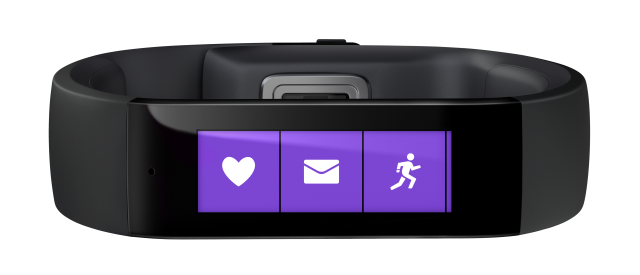
After being leaked just a few hours ago, it’s now official: Microsoft’s first entry into the wearable space is Microsoft Band, a fitness band.
The gadget isn’t a smartwatch and isn’t intended to replace your watch. It’s a Bluetooth fitness band packed full of sensors: optical heart rate sensing, 3-axis accelerometers with a gyroscope to track movement, GPS to track your runs even if you leave your phone at home, skin temperature, galvanic skin response presumably to measure sweating, ambient light and UV light, and a microphone so it can be used with Cortana on Windows Phone.
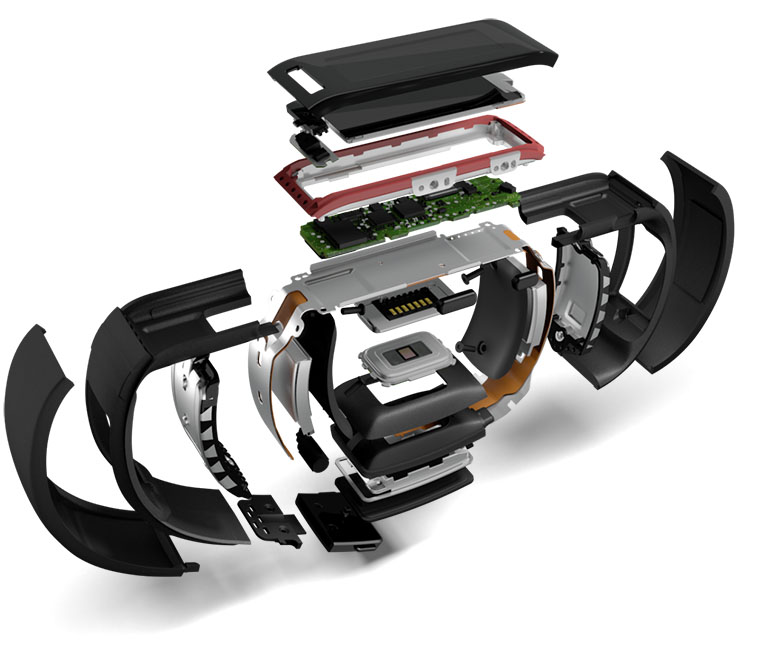
The 1.4-inch touch screen with its 320×106 resolution can deliver alerts, and there’s a vibration motor too. Twin 100mAh batteries give it 48 hours of what Microsoft calls “normal use” though GPS can shorten this. The charge time is 1.5 hours, using a magnetically attached USB charger. There are three different sizes, so it should fit on most wrists.
Read 7 remaining paragraphs | Comments
Microsoft Jumps Into the Growing Market for Wearable Fitness Technology
Microsoft is joining the companies who see wearables as a way into the wellness business without all the red tape that comes from being a true medical company.
Apple Pay Rival MCX Open to Other Technology
A group of retailers known as the Merchant Customer Exchange said that it could yet decide to use the technology that Apple Pay relies on to process transactions.
Self-driving Cars Are Starting to Evolve

Today was the third day of Ars UNITE, our virtual conference, and the topic of the day was the advent of the self-driving car.
Our self-driving car feature this morning looked at the technological solutions that will soon allow our cars to drive themselves under certain circumstances, assuming the regulations and other policy issues are in place. That piece has seen a lively discussion covering a number of different areas. Ars reader mexaly suggested that “[t]o succeed, robots need only drive better than average humans. That’s not a high bar.”
Some were skeptical that self-driving cars would be safer. caldron writes, “I think it is a big leap to assume a self-drive is better than a human at driving. Sure in certain conditions and in terms of reaction time, but no computers have been able to reach our level of decision making and ability to react in abstract and unpredictable situations, and there is none in the foreseeable future. We make constant micro-decisions all the time. When there is a grey-area situation that requires deduction I am not so sure a computer will be able to react properly.”
Read 66 remaining paragraphs | Comments
How Tech Can Protect You From Big Data
As our digital trails explode, privacy is being eroded. Two heavyweights in predictive analytics debated whether it’s possible to use data-mining technologies and protect privacy at the same time.
Bits Blog: HP Unveils Plan to Make 3-D Printing an Everyday Thing
The company, which made a fortune on conventional printers, has long been expected to go into 3D printing, which is still a small market.
Navigate a Drone too Close to a Stadium, Go to Jail
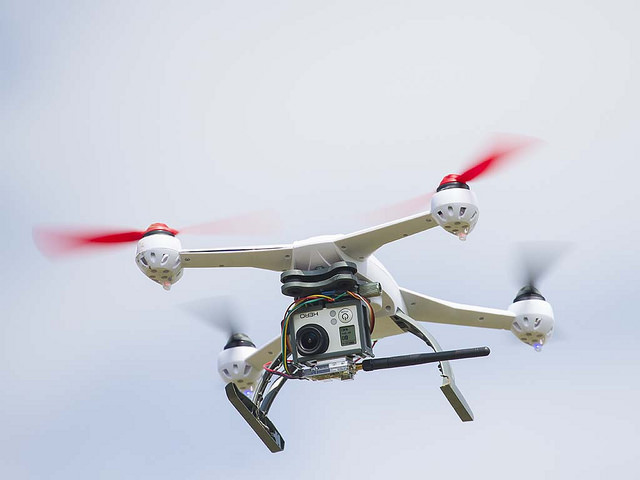
Pilots of drones or model aircraft could be fined or jailed for up to a year if they navigate near automobile racetracks or big sporting stadiums, the Federal Aviation Administration announced.
The Notice to Airmen (NOTAM) No. FDC 4/3621 is the first time US flight regulators have moved to criminally punish wayward drone pilots.
The rules—the first FAA update to pilots concerning sports venues in five years—reiterate an existing standard that prohibits pilots of all aircraft from flying under 3,000 feet and within three miles of stadiums from NCAA Division 1 football, Major League Baseball, the National Football League, and even big car races. The no-fly area is designated “national defense airspace” for one hour before and after events at these venues with 30,000 or more seating capacity. The new regulation does allow for the “broadcast rights holder” of stadium events to enter the no-fly zone with permission.
Read 5 remaining paragraphs | Comments
Android Smartwatch ‘Runs for a Week’
New Android-powered smartwatches should last for a week or longer between charges thanks to their use of both e-ink and LCD screens.
VIDEO: Drone Rules ‘Not Being Enforced’
Strict regulations will need to be introduced before large drones are allowed to appear in the UK’s skies, pilots association Balpa has said.
Robot Bees Could Assist With Tricky Rescue Operations
Robert Wood, an electrical engineer at Harvard’s Microrobotics Lab, is engineering colonies of RoboBees. They don’t sting, and they can be used for surveillance or crop pollination.
Fitbit Says It Will Make Changes to Address Complaints About Allergic Reactions
The wristband will now come with a warning that it contains nickel, a common allergen used in many types of products, and a new sizing guideline to prevent users from wearing the devices too tightly.
After Biosafety Lapses, US Halts Funding for Work Modifying Virus Targets
Today, the White House announced a pause in a specific type of research on viruses. Rather than being a response to the recent Ebola infections, this dates back to events that began in 2011. Back then, researchers who were studying the bird flu put it through a series of lab procedures that ended with a flu virus that could readily infect mammals. Some members of the scientific community considered this work irresponsible, as the resulting virus could, again, potentially infect humans.
Similar research and a debate over its value and threat have continued. Now, however, the Obama administration decided to put it on hold. Prompted by several recent biosafety lapses (including the discovery of old smallpox samples at the National Institutes of Health), the government will temporarily stop funding for these projects. During the pause, the government will organize a “deliberative process” that will consider the value of the research and the appropriate safety precautions that will need to be followed if it’s done. The review will be run by a combination of the National Science Advisory Board for Biosecurity and the National Academies of Science.
The funding pause will apply to any projects that can allow viruses like the flu, MERS, and SARS to either add mammals to the list of species they can infect, or to increase their virulence following infection. The government also hopes that any lab pursuing this research using private funding will voluntarily join in the pause. Researchers who are simply studying naturally occurring viruses without modifying them will not be affected by this pause.
Read 1 remaining paragraphs | Comments
Take Your Medicine, Tap Your Phone And Collect A Prize
Apps offer games and rewards to keep you taking your prescription medicine. While rewards may not be for everyone, they could give some people a helpful motivational boost.
VIDEO: Tech Review: This Week’s Headlines
A French bank allows its customers to pay people via tweets, plus other technology news
Smart Meters Open to Hack Attack
Smart meters widely used in Spain can be hacked to cut power bills, two security researchers find.
How A No-Touch Thermometer Detects A Fever
Some U.S airports scanning passengers for Ebola are using hand-held infrared thermometers to help detect fever. The devices aren’t perfect but do contribute to the safety net, health officials say.