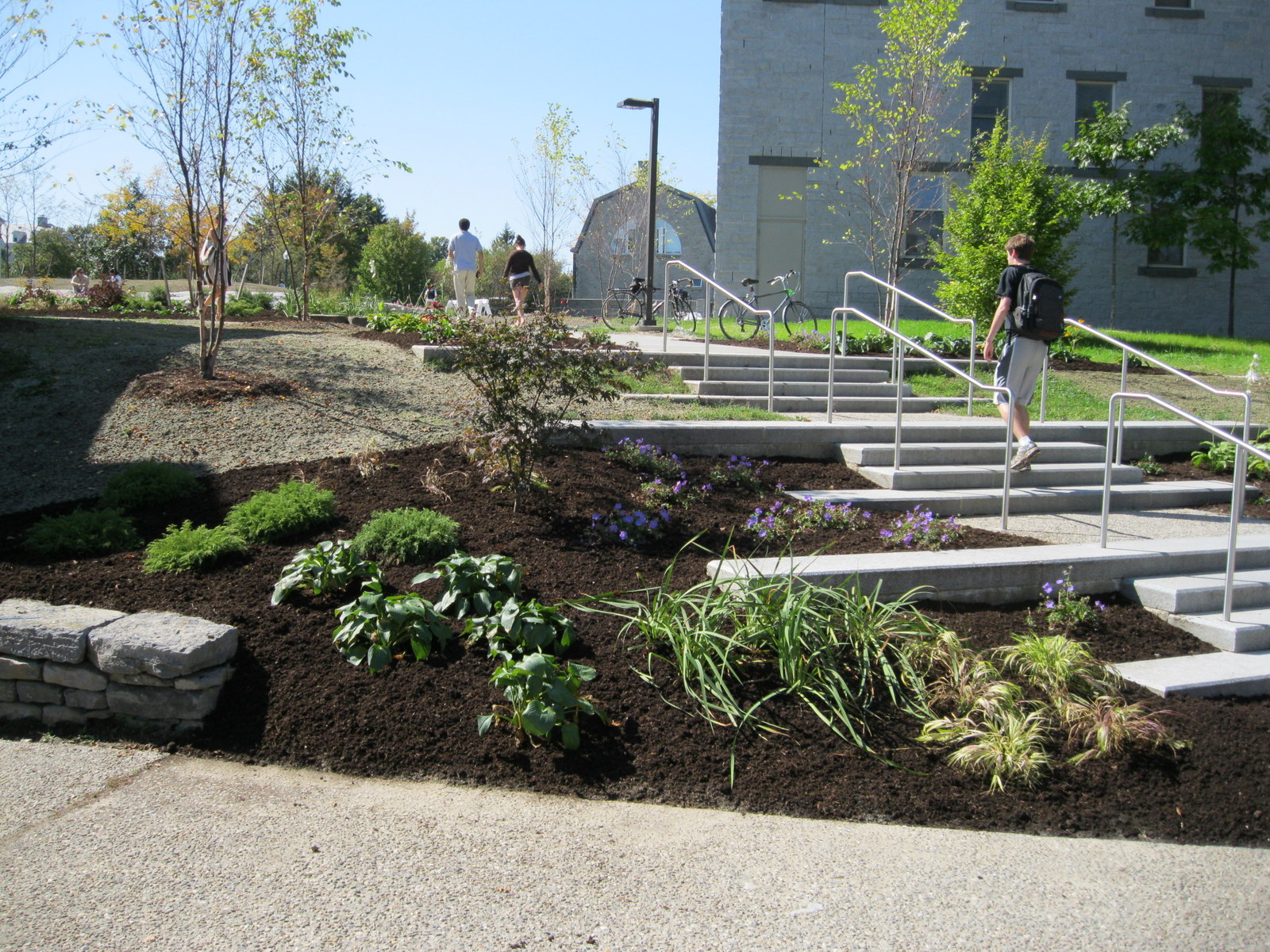
Atwater Plan Posted

Categories: Atwater Contest

Over on the Turf Battle blog, I’ve posted the plan we’ve developed for the Atwater area of campus. It is still a work in progress, and I’d like to invite all my readers to add comments or suggestions. As we (hopefully) start construction this summer I’ll be posting updates here on Middland.

And by the way, I swear I just saw the sun. At least I think that’s what it was.

Arbor Day 2011

Categories: Trees

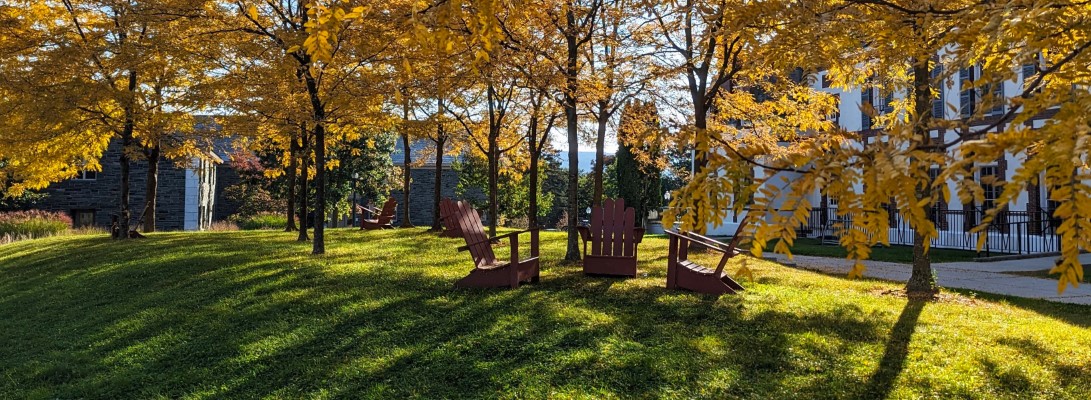
As you would expect from a bunch of tree fanatics, Arbor Day is a flexible holiday. The national holiday is the last Friday in April, but Vermont has snow experience in April, and pushes the date back to the first Friday in May. Here at Middlebury, we’re pushing it back even a little further, as a welcome diversion from studying for finals.

Come Celebrate Middlebury College’s Arbor Day

Wednesday May 11

Take a break before Finals start and celebrate Middlebury’s new title as a Tree Campus USA, designated by the Arbor Day Foundation! After over a year of planning and coordination, Middlebury was named a Tree Campus by the Arbor Day Foundation for 2010 this February. We are one of only two schools in New England to receive this recognition.


The schedule for our celebration is the following:

1:30 pm- Tree campus tour, beginning from McCullough patio, ending at Bi-Hall, in time for—

3:00 pm- Tree planting, located between Coffrin and Bihall. Plant your legacy on campus. Planters get eternal gratitude, and an ice cream sandwich.

4:30 pm- Tree-K running race (3mi, starting from McCullough patio and following the cross country course). Touch 20 or so trees on the McCullough Quad before finishing back at the patio. Fastest Male and Female students win a gift card to the Campus Bookstore, Fastest Faculty/Staff to win a blueberry bush.

5:00 pm- Saplings kids’ race (1/4 mi loop around the main quad in front of Old Chapel, start at the McCullough Patio)-Prizes and ice cream for all kids.


Pussy Willow

Categories: Blooms

Ask 20 gardeners, and you’ll get 40 or more answers on what they consider signs of spring. One of the most common answers, though, will probably be Pussy Willow.

Salix, the Willow family, claims more than 400 members, with a range from the tropics all the way up to being the last woody plant before you are stumbling across the Arctic Circle. Many kinds are native to western China,  including the magnificent but weak-wooded Weeping Willow, but North America claims her share as well, about 75 varieties. Pussy Willow is one of these, although there are several willows with that name.

Go to your local garden center, and you’ll probably find, well, you probably won’t find pussy willow at all. Garden centers have a hard time selling very early or very late bloomers, like pussy willow or Witch hazel. Both bloom before most garden centers this far north are even open, and, during the regular growing season, these wonderful shrubs probably wouldn’t even catch your eye.

Should you happen upon one, though, probably in the sale bin, odds are it is a Salix caprea, a European Pussy willow also know as Goat Willow. Native from Europe to northeast Asia and northern Iran, it is nearly identical to our native species, Salix discolor. Our native form is more susceptible to canker, and have deeper brown branches and a nearly bluish white underside to the leaves, but it is the canker scaring plant propagators from growing the native species.

Pussy willow (both) reach about 15-25 feet high, and about 12-15′ in width. Native to wet, moist areas, they are frequently seen in marshes, wetlands, and on the edges of rivers and ponds. The ‘pussies’ we are familar with in kindergarten are male catkins, flowers with inconspicuous or, like Salix, no petals. While most catkins are designed for wind pollination, the Willows are known for insect pollination. Perhaps the non-showiness of the catkins is forgivable in the wild, as nothing else is in bloom, competing for the insects to visit them. For you pollinators among us, they are high-sugar flowers. At any rate, they are easy enough to force in a vase starting in February for the spring-desperate.

In the wild, Pussy Willow is an important source of food for browsing animals, such as deer and moose, although not the most palatable (who asks?). Duck and other waterfowl feed on the catkins in the early spring, while mice and other rodents can be found eating the stems in the winter.

Majorie Harris, in Botanica North America, writes of the Pussy Willow, and references a somewhat sketchy web site for the legend of how Pussy Willows got their name. It’s a Polish legend, and involves a sad, crying cat next to a river, whose kittens had fallen into while chasing Butterflies,as kids and kitts are likely to do. Hearing their cries, the Willow trees next to the banks swept down, arching into the river and allowing the kittens to cling to their branches, when they were safely brought to shore. Every spring since, the willow sprouts tiny fur-like buds at the tips of their branches in remembrance.

We have some Pussy Willows at Middlebury, but I had to do some thinking to remember where. While there undoubltalby some wild native species along Bi-Hall Road or the wetlands next to the Johnson Parking lot, the best species on campus proper are probably right next to Atwater Dining Hall, on the south side, where they were planted in the ditch that runs along there as part of the storm water mediation.


Some snow

Categories: Weather

The most remarkable thing about this last snow storm on Monday is probably the fact I almost didn’t write about it. After this punishing winter of snow removal, yet another storm didn’t seem worthy of taking the time to whine. But, after setting some records, I thought I’d write about it, if only so students can brag to their parents.

We don’t know how much snow we got here on campus, as the wind was drifting the snow so radically that some places were devoid of snow, while others were 6′ deep in drifts. I asked the guys in the landscape department how much snow we got, and the answers are unprintable. I measured 20″ in my driveway, but that was pretty windblown too. According to the National Weather Service, Cornwall got 22″, Bridport 24″, so we’re thinking somewhere in that neighborhood sounds about right.

Snow Totals Map-click for larger version

This is one for the record books, both the storm and this winter. The Burlington Weather Service office recorded 25.8″ of snow, beating our Valentine’s Day storm of 2007 by a tenth of an inch. (Incidentally, the record storm was last year, January 2-3, where they got 33.1″. I’ve erased that from my memory) This is the largest March storm, however.

In terms of our yearly records, we’re at 124.3″, third highest total. Number two comes in at 132″, in 1886-87, and the record holds at 145.4″, in 1970-71. I can see us beating 1886, but if we break the ’70 record there is going to be some sore shovelers at Middlebury.

Speaking of sore, yes, there are still some sidewalks not cleared yet. We’re trying! The problem with massive snows like this is that our regular plows just can’t handle it. You can only push a huge pile of snow for so long before the wheels start spinning or you have nowhere to put it. For these types of events we put large snowblowers on a couple of our tractors, but that’s slow going too. And because classes were still being held, the extra sidewalk traffic impeded progress all the more. Uncleared sidewalks means snow shovelers are walking through snow from building to building, dragging a snowblower through drifts.

And on top of all of that, a lot of us couldn’t even get to work. For the most part, the only workers that made it in lived in Middlebury, except for snow miraculous sidewalk tractor operators, who I’m thinking were airlifted in. My own road was roughly plowed by a Monument Farms tractor half the size of my house-the cows have to be fed-but the town plow didn’t make it until the end of the storm Monday evening.

Tired of the snow? If it makes you feel any better, the stake at the summit at the top of Mount Mansfield says they’ve got 90″. That’ll be there a while.

Flower Show-Sneak Preview

Categories: Random Thoughts

I spent yesterday helping set up the Central Display for the Vermont Flower Show-it’s my spring training like baseball players have in Florida. Shoveling mulch came easier this year than some past years, must be all of the snow shoveling. WCAX did a blurb on the news about the show, and in the interest of tempting more people to go this weekend (it’s going to rain all weekend, what else you gonna do?), I took some poor pictures with my cell phone camera. The theme (that Ed let slip in the WCAX video is thought of by a “past board members kids and wife”)(I’m saying nothing, but we’re thinking the next one should be “Tangled Up in You”) this year is “Sweet Dreams”, and Ed came up with a great design.

Here’s some pictures, but you aren’t going to get a good feel for the scale of the central display. Suffice it to say that it would just about fit on the ice at Kenyon. Click on the picture to view a larger size.

Lou Nop of Nop’s Metal Works in Middlebury made a metal bridge for part of the display, and it sits over a pond in a tropical setting.

Here’s some of the tropical garden. That’s a giant Banana plant in the center.

We forced an entire vegetable garden.

This is a 20′ “bird nest” complete with paper mache eggs. It was constructed with the help of the Urban Forestry program at the Northland Job Corp in Vergennes. Took them about a half of a day. And here’s a great Middlebury College connection-the branches making up the nest are leftovers from the harvesting of the Willow project out on Route 125.


Middlebury Becomes a Tree Campus

Categories: Trees

I’m very (very) pleased write that Middlebury College has been named a Tree Campus for 2010, culminating work started in January of last year by the students in my Trees and the Urban Forest Winter Term class. Special thanks goes to two students in particular, Chelsea Ward-Waller and Hilary Platt, for being the driving force behind the application process, and for being strong advocates of our urban forest on campus.

I’ll quote from the letter we received-

The Tree Campus USA program is an initiative that sprang from a partnership between the Arbor Day Foundation and Toyota MotorNorth America, Inc., to foster the development of the next generation of Tree Stewards. The program is designed to award national recognition to college campuses and the leaders of their surrounding communities for promoting healthy urban forest management and engaging the3 campus community in environmental stewardship.

As you already know, trees are a vital component of the infrastructure in campus landscaping, providing environmental and economical benefits. Trees in urban areas, and especially on campuses, reduce the heat island effect caused by pavement and buildings. Leaves filter the air we breather by removing dust and other particles. Properly placed trees create a welcoming environment that makes students, administration,and alumni want to be a part of the campus.

Last year there were 74 Tree Campuses across the country,and this year there are 114. Middlebury is the only campus in Vermont that is a Tree Campus, and one of only two in New England. The older program, Tree City USA, has over 3400 communities, with 8 in Vermont, including Burlington and Rutland. We all can take great pride in our trees and campus landscape, and I enjoy being part of a team that places as much value as we do on our campus environment.

The standards to become a Tree Campus are designed to create a sustainable plan to care for and manage campus trees, and to provide opportunities to engage and educate college students and community members in tree planting, benefits of trees, and in Best Management practices. To be eligible for Tree Campus USA recognition, schools must meet five core standards of tree care and community engagement: Establish a campus tree advisory committee, evidence of a campus tree-care plan, verification of dedicated annual expenditures on the campus tree-care plan, involvement in an Arbor Day observance, and a service-learning project aimed at engaging the student body in sustainable efforts. Collaboration is encouraged-the program is a platform for students, faculty, staff, and community members to team up and learn from one another about the benefits of trees on college campuses. Ensures true sustainability of the urban forest by joining forces with the broader forest community.

Our service learning project was a high point in the entire process. Another group of students in the Winter Term tree class worked on a complete Street Tree plan for an area in Middlebury known as Buttolph Acres. This included an inventory of existing trees, recommended locations and varieties, as well as tree planting specifications. The students also used a computer model known as iTree to estimate what the potential carbon sequestration, storm water abatement, and pollution control the tree planting would yield in 25 and 50 years. The work they put into this is amazing-I highly recommend downloading it ( Buttolph Acres Proposal ) and reading it.

And yes, we’re planning a heck of an Arbor Day (May 6). Stay tuned!

This Winter, explained.

Categories: Weather

Some of our winter weather is controlled by a weather oscilliation know as the North Atlantic Oscilliation, or NAO. This is defined by the difference in atmospheric pressure between an area above Iceland and above the Azores. Ordinarily, low pressure in the winter sits over Iceland, and high pressure over the Azores, and this creates the Polar Vortex, which is simply wind and weather spinning counter-clockwise around the north pole. Picture the two pressure systems as gate keepers, keeping the cold wind spinning around the pole. This strong low pressure over Iceland also draws air from the south west across Eastern North America, giving us somewhat more mild air. Weather scientists call this a teleconnection, or linking of pressure systems across broad geography.

This winter, extraordinary high pressure sat over Greenland, matched by high pressure over Alaska. This caused a breakdown in the polar vortex, causing cold arctic air to dump southward, on top of us. This cold air spilling south is replaced by warmer continental air. A similar event happened last winter as well. Scientists are blaming our colder than normal temperatures and our increased precipitation on this unusual pattern.  Much research is taking place now on this event, known as a Warm Arctic/ Cold Continent.

Average Pressure Pattern

High Pressure, February 2010

The reason for this is a disturbing lack of arctic ice. In January, there was a record setting amount of missing ice in the Arctic, about twice the size of Texas. In the summer, more heat is absorbed by the ocean, which releases in the fall, warming the air above and causing the high pressure. Ocean temperatures are well documented to influence weather patterns, such as the El Nino events, or even hurricane patterns in the Atlantic ocean. And most weather researchers are laying the blame of the lack of arctic ice right at the feet of global warming.

This weather pattern has been breaking down the last couple of weeks, as low pressure is forming in the arctic, creating more sea ice, keeping the cold air locked in the polar vortex. It may be that the groundhog was correct, and our exceptionally snowy and cold winter may be coming to an end.

Rikert Ski Touring

Categories: Random Thoughts

I believe one of the greatest secrets at Middlebury College is the Rikert Ski Touring Center, located at Breadloaf Campus up in Ripton. Home to the Middlebury Nordic teams, as well as my daughter’s Middlebury High School team, this gem of a ski area has very well groomed trails, wonderful staff, and, this year, plenty of snow.

This coming weekend is the Bill Koch Ski Festival, so in honor of the weekend I’ve made something for the kids to play with, if yours are anything like mine. I’ve converted some Arc GIS files to a Google Earth File, so now you can fly around Rikert in Google Earth and see where you went skiing for the day. Chester Harvey in the Geography department has made a new trail map for Rikert based on this shapefile, and I’ve taken the trail names both off of that new map, as well as the older traditional map.  So the Google Earth file is still a rough draft, and some of the trail names may be a little off, but it’s still fun.

Right click here, and choose Save As, then don’t forget where that is. Clicking on that file should open it in the right program. Naturally, you will need Google Earth installed on your computer. I’ve been having bad blog luck, and just clicking on the file itself will probably lead to a page of gobbledigook.

Winter Carnival-Snow Sculptures

Categories: Outdoor Art

There is a lot more to snow sculpting than meets the eye. Our department does quite a few things, but probably one of the most unusual is making giant blocks of snow for the annual Winter Carnival snow sculpture contest.

Not this year, obviously, but some years the primary ingredient can be a little tricky. I’ve heard stories of past years: hauling snow from breadloaf, or moving it from Kohn Field. This year, we merely pushed snow up in piles right out in the quad near where we need them. Didn’t even have to push from any sort of distance.

We start with the box itself. Hopefully you’ll get a feel for the size from the picture-it’s about 7′ tall and about 6′ wide. 4 panels mate together, and then are held by ratchet straps.

We then start some mixing. Yes, with a backhoe. We’re talking quite a bit of snow here. By adding water to a fluffy snow it packs better, like the perfect snowman snow you used to wait for growing up. We blend it until it is about the consistancy of mashed potatoes. Some years this part of the process is miserable, what with the cold and all. This year, the day started in the teens, but quickly warmed into the upper 30′s.

Next, we start adding the snow to the molds. I’ve always been a big fan of the power of hydraulics, never more so than figuring out how to get several yards of snow 8 feet up in the air.

The snow gets placed into the molds in what civil engineers call ‘lifts’, or many individual layers each compacted to remove air pockets. This is a pretty important step. We work about 1′ of snow at a time, and carefully fill the edges of the crate, and use a tamper across the entire surface. Student volunteers are very helpful at this stage-that’s Grace (I never got her last name), she’s the organizer of the competition this year, working with Brian Paquette from our landscape department. And yes, that’s me behind the camera, not avoiding work, I took the next turn.

We fill the boxes to the top, wait for them to set up for a little bit, then take the ratchet straps off and move the contraption to the next location. This year we made 5 snow cubes, as only 5 teams entered. Then, later during winter carnival, the students have at it. We supply shovels, ice scrapers, and other implements of mass destruction.

Here’s one of the teams. Like I said, it was warm that day. This team wouldn’t tell me what they were making at the time. I had no idea the competition was so cut-throat. I came back briefly to campus over the weekend to photograph the finished sculptures, and, like most years, was impressed by the creativity. I never seemed to have progressed past snowman, or feeling expansive occasionally, snow fort.

This was what the team above made, couch and tv set. I’m hoping the antenna for the tv came from the ground, not a live tree.

One of my kids liked the ice cream cone best. It was about 10 degrees outside when taking this picture, so maybe this inspiration came from the middle 50′s of the previous day.

I liked the idea of the mini-Mead Chapel right below the larger version.

We don’t know what this is. Cobra head? Squirrel tail? Modern snow?

This was the winner, both by Grace the judge, and by my kids (not that they had any say in the matter.) Wine and cheese, obviously. Pretty cool.

The Vermont Flower Show

Categories: Random Thoughts, Uncategorized

Much like the Shameless Commerce division of Car Talk, I’m veering slightly from the ‘educational institution’ blog to plug one of the finest things you should be doing this winter, which is attending the Vermont Flower Show at the Champlain Valley Fairgrounds in Essex Junction, on March 4-6.

It’s been my pleasure to help set up this show for many, many years (10, 15?) I was the central display designer twice-a herculean task that was one of the most rewarding things I’ve ever done. I look at set up for the show much like baseball players going to spring training, the smell of soil and green plants, the movement of mulch fork and shovel getting your muscles in shape for the upcoming year.

I’ll tell you what goes into the display, but you won’t believe me. More than 150 yards of mulch ( a yard of mulch fits in the back of a small pickup truck), an entire commercial greenhouse of forced bulbs, hundreds of perennials, and trees and shrubs forced for blooms as well. Yes, entire trees. We’re a little crazy, admittably. And that’s just the plant material. Read about more of the design for more of the scoop, including a sketch of the design.

What makes the construction of the flower show all the more remarkable, though, is the hardest to explain. At most flower shows, individual landscapers and garden centers construct their own booths, miniature landscapes amongst a green mall for a week or weekend. In Vermont, though, the green industry is a little smaller, and not many firms have the resources to pull off a booth of forced plant material. So, many years ago, the Vermont Nursery and Landscape Association teamed up to hold a flower show, then at the Sheraton, where everybody got together and built one central display, for the betterment of the industry on the whole. Competitors the rest of the year, everybody teams up and shares tasks, and creates a spring world inside on a snowy weekend.

There are many other things to do at the show as well, not just walking through the central display. The admission price alone is a steal for all the talks and hands-on seminars that are possible to attend, and kids have their own room to ‘craft’ in as well. There are even cooking demostrations, along with vendors selling gardening merchandise, and plants. I dare you to walk out of there without some forced flowers in your hand.